
Everything About Systemic Hypertension
Systemic Hypertension is a heart-related blood pressure issue. It is commonly known as high blood pressure that arises in the systemic arteries of the body. Systemic arteries are the careers of blood from the heart to other tissues.
It is caused by the contraction of small arteries in the body. Due to this contraction, the peripheral resistance created by the arteries to the blood flow increases.
This peripheral resistance of the small arteries increases the workload of the heart and increases arterial pressure.
The body’s blood pressure is measured in two levels; Systolic and Diastolic. The systolic level measures the highest blood pressure and the Diastolic level measures the lowest.
This usual systolic blood pressure of a human depends on several factors that include health, age, and fitness. The highest average blood pressure reading of adults measures 140 mm HG.
Everything You Must Know About Systemic Hypertension:
Causes of systemic hypertension:
There are certain reasons to gain systemic hypertension. There are 95 % cases of systemic hypertension of primary or essential stages.
But systemic hypertension which is caused due to another condition or disease is referred to as secondary hypertension.
For example, narrowing of the renal artery (kidney disease), high blood pressure which might be due to narrowing of the Aorta, or by some endocrine disorders (e. g. Cushing’s Disease).
Symptoms of systemic hypertension:
According to medical science, there are no actual symptoms of their own and it is shown whenever complications arise.
Due to narrowing of the Aorta, both systolic and diastolic blood pressure are may because of strokes, heart failure (myocardial infarction, involving the death of heart cell and muscle tissue), atherosclerosis ( the inner wall of arteries has gained a fatty plaque), kidney failure, and bleeding from an artery into the brain’s tissues (hemorrhage).
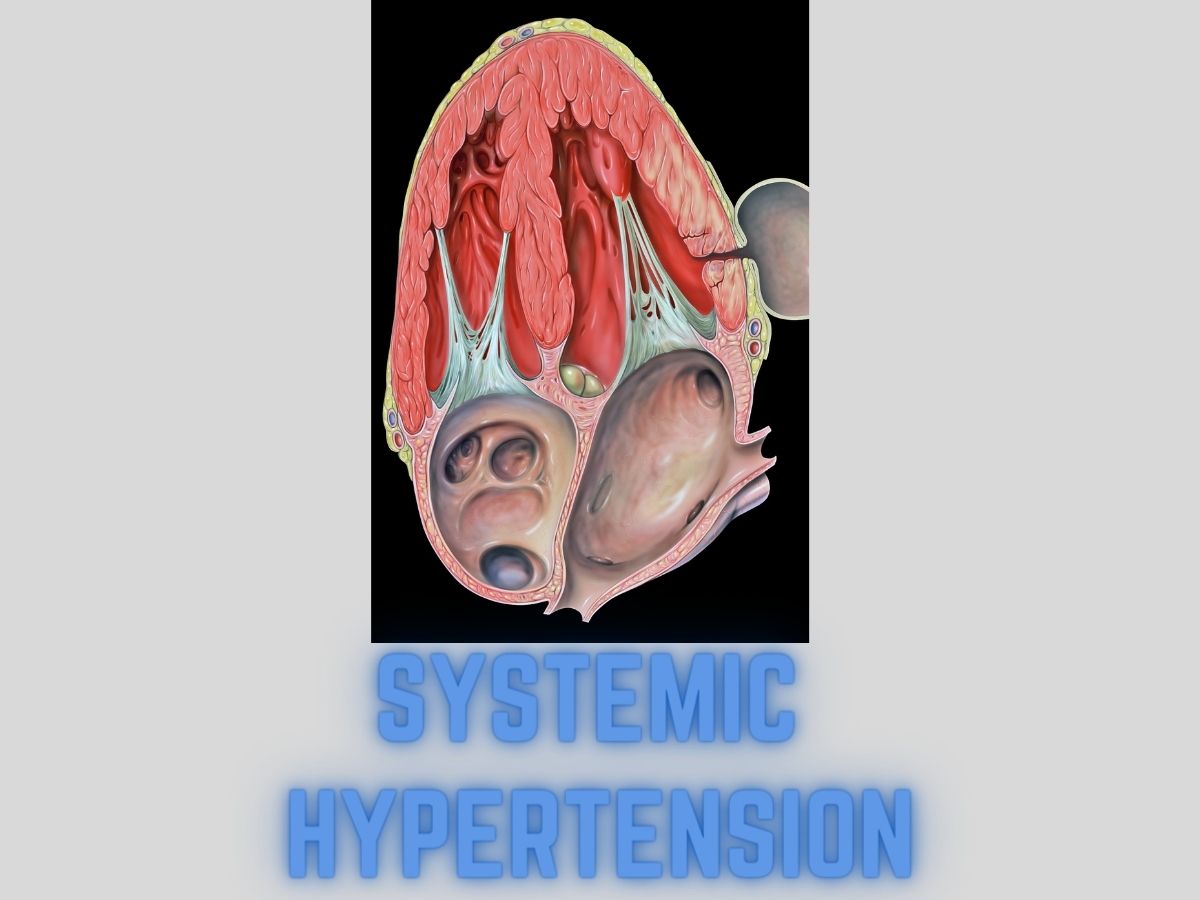
The primary cause of left ventricle enlargement is systemic hypertension. In adults, there is congestive heart failure in which our heart is unable to pump adequately.
As we know, the left ventricle of the heart in human beings is the main pumping chamber for blood supply to all arteries.
Due to the enlargement (hypertrophic), it is harder to move blood through the arteries to the body tissues. And due to the damage in arteries by systemic hypertension, it may cause arterial disease.
Many people who have systemic hypertension are unaware of this problem or their conditions. And it is important to monitor blood pressure to avoid and can be controlled before serious conditions or problems arise.
And its Diagnosis is based on the record of high blood pressure of the patient and it is risky to diagnose that patient on a single occurrence. And we can protect ourselves by adjusting medicine and our lifestyle.
Certain medications help in controlling this disease:-
- Beta-blockers (which relax the blood vessels)
- Calcium blockers (which relax the blood vessels) and help in lowering systemic blood pressure.
- A diuretic is another medication that may help to reduce fluid retention and get rid of excess salt.
We can control systemic blood pressure by taking a low salt diet and exercise program.
Systemic hypertension in adults:
In a study specifically related to systemic hypertension, more than 90% of the adults diagnosed with this issue had been found suffering heavily.
The issue seemed to be very serious and doctors were not able to find any cure for this disease.
The main causes and sources of the issue seem to be unknown, which also raises the difficulty in finding the total risk and danger of the disease.
The research says that it somewhat depends on the lifestyle and food diet taken by the adult. Some major causes of systemic hypertension included excessive use of tobacco, high salt ingredients, cholesterol-containing foodstuff, and use of prescription drugs.
All these ingredients were found to increase the level of blood pressure in the body.
If a person follows good dieting and fitness rules then he may be able to lower the risk of having systemic hypertension.
These good habits include regular exercises, potassium in-rich diet, calcium, and magnesium. Green vegetables, dairy items, and low-fat fish have also been found to be very effective in the treatment of systemic hypertension.
The remaining 10% of adults may have high blood pressure due to other factors such as diabetes, kidney disease, anemia, and other issues.
As we discussed earlier, the intensity of systemic hypertension increases with the growing age. Over 75% of people aged between 70-80 years are facing this vital issue.
The number of systemic hypertension patients decreases to just 10% when it comes to people aged between 35-45. Young people, aged between 16-30 are safe from this disease as the number goes down to just 1%.
Systemic hypertension treatment:
By regular exercise, we can control our blood pressure and it is one of the ways by which we can maintain our blood pressure.
The exercise will help in dilating the blood vessels and help to control body weight by reducing vascular resistance. It is observed that 60 % of people with hypertension are 20 % or more overweight of the body which resists decreasing blood pressure.
Sometimes, it is found that some cases of systemic hypertension will produce side effects. Excessive weight training may worsen hypertension.
Therefore, people should take suggestions from cardiologists about their physical activity to review the risk. People should also take suggestions from dietitians to maintain their daily diet.
Pregnancy issues:
All over the world. Mostly one-quarter of U.S women of childbearing age have chronic systemic hypertension.
So women are also affected by this disease and mostly pregnancy can include high blood pressure and these are the most at risk.
It is found that the following are the periods when women face blood pressure related problems during their pregnancy-
● Women having their first pregnancy under the age of 17 or over 35
● And those women who are bearing multiple babies (twins, triplets, etc.)
● And women who are overweight, smoke.
● Women have an inadequate diet
● Or those women who belong to that family have a history of hypertension.
Conclusion:
There are many complaints including an insufficient supply of blood or oxygen to the mother or fetus. Therefore the above-given information is a detailed analysis of how systematic hypertension can be a severe problem if not taken care of with the help of medication.